
In order to promote and safeguard public health, medicines regulation involves a number of interrelated actions. Why is the regulation of pharmaceuticals effective? Implementing regulations can be politically and technically difficult because regulatory functions entail interactions with a variety of stakeholders. The scientific foundation of medicine regulation is more significant than its administrative component. The three requirements that all medications must fulfill are efficacy, safety, and high quality. Although entering the Chinese medical sector is a substantial opportunity, there are particular regulatory requirements to be aware of. To guarantee safety, transparency, and accessibility for Chinese regulators, medical professionals, and patients, medical products, including medicines, medical equipment, diagnostics, and health supplements, must adhere to strict labeling and translation regulations. Custom rejections, market recalls, fines, or even prohibitions from entering the Chinese market might be the consequence of incorrect labeling, mistranslations, or noncompliance (Ali & Nollet, 2025).
This article examines the essential elements of China's medical translation labeling regulations, their significance, and strategies for maintaining compliance until 2025 and beyond.
Importance of medical label translation in China
The communication process of translating drugs overcomes cultural barriers. To guarantee the goal of information transmission and satisfy the client's needs, the translator should take into account the cultural background, expressive patterns, and psychological expectations of the target audience. Additionally, because of the unique nature of pharmaceuticals, translators need to be able to rigorously and scientifically communicate information in addition to accurately analyzing it. When lives are at risk, medical labeling accuracy is crucial. Clinical mistakes or legal violations may result from poor translation. Chinese authorities want labeling that is exact, culturally relevant, and unambiguous (Ren et al., 2023).
Regulatory Framework for Medical Labeling in China
● The primary agency in charge of regulating pharmaceuticals and medical devices is the National Medical Products Administration (NMPA), formerly the CFDA.
● Law of the Drug Administration, as amended in 2020
● GB/T 9969 for general product labeling and particular GB standards for medical categories are mandatory GB standards (National Standards) under the Regulations for the Supervision and Administration of Medical Devices (RSAMD) (Song et al., 2022).

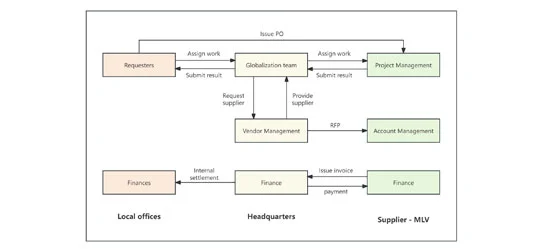
Figure 1. Detailed Translation Process for Hong Kong Research Institutions' NMPA Submissions (Lu et al., 2025)
Guidelines published by the NMPA on drug labels and instructions
The NMPA requires medical items to be registered, and throughout the registration process, the labels, packaging, and instructions must be examined and authorized. All submissions, including translations of technical documentation from other countries, must be made in Chinese (Provisions for Drug Insert Sheets and Labels, n.d.).
General considerations
● The State Food and Drug Administration (SFDA) must approve all labels and insert papers.
● There may be no misleading statements or promotional materials on labels; they must solely reflect the content on the insert sheet.
● Packaging must not include extra marketing information or unapproved audio or visual content.
● Intelligible, standardized, and scientific language is essential, particularly for over-the-counter products.
Guidelines for Drug Insert Sheets
● It must contain safety information, clinical trial results, and scientific data.
● It is mandatory to use standardized words and units.
● For injectable and over-the-counter medications, a list of all active components and excipients is required.
● It is necessary to obtain prior approval for any modifications and provide updated versions as soon as possible.
● Inadequate documentation of adverse responses can result in responsibility for the manufacturer.
Standards for Labeling
● All necessary drug information must be on both the inner and exterior labels.
● Name, manufacturer, batch number, storage, expiration date, dose, and indications.
● The inside label must at least include the drug's name, strength, batch number, and expiration date if there is limited room.
● Particularly for prescription versus over-the-counter medications, labels for comparable items must have different designs or colors.
● Dates of expiry must have a clear format, such as "Valid till 2025/12/31."
1. Name of Product
The NMPA-approved official generic name needs to be in Chinese.The use of an international nonproprietary name (INN), if one exists, must be uniform.
2. Number of Registration Certificate
Every authorized product will have its own certificate number from the NMPA. The package and insert must clearly print this.
3. Manufacturer's Name and Address
The Chinese address and contact information of the local authorized representative are also required for imported goods.
4. A description or composition of the product
Pharmaceuticals: composition by unit, excipients, and active components.Devices: technical details, components, and software (if any).
5. Indications and Intended Use
A detailed explanation of the intended use, monitoring, or support of the product. Translations must adhere to NMPA-accepted regulatory terminology as well as medical correctness.
6. Guidelines for Dosage and Administration
For medications: dosage according to weight, age group, severity of ailment, etc. For devices: detailed maintenance, calibration, and operation instructions.
7. Warnings and Contraindications
Translations must use terminology that is accepted in medicine and be precisely defined.If applicable, black box warnings must adhere to the NMPA's format.
8. Adverse Events and Safety Measures
Data from clinical trials or manufacturers were used in the translation. It should use appropriate terminology and cover both minor and major side effects.
9. Storage and Shelf Life
Includes environmental parameters (temperature, humidity), expiration date, and reusability/re-sterilization information.
10. Safety Icons and Symbols
must adhere to Chinese GB standards (such as GB/T 191) and have a Chinese legend or explanation on the label or insert.
Branding and Trademark
● The typeface, color, and placement of the Chinese adopted name must be noticeable.
● Trade names and trademarks ought to be well-placed and less noticeable.
● It is forbidden to use unapproved names or marks.
● Certain categories, such as drugs and biologics, must have the necessary symbols displayed.
● There are consequences for noncompliance under the Drug Administration Law.
References
Ali, F., & Nollet, L. M. L. (Eds.). (2025). Global regulations of medicinal, pharmaceutical, and food products (First Edition). CRC Press, Taylor & Francis Group.
Provisions for drug insert sheets and labels. (n.d.). Retrieved July 7, 2025, from https://english.nmpa.gov.cn/2019-07/25/c_390582.htm
Ren, Y., Fan, J., & Wang, Y. (2023). Chinese translation of trade names of imported drugs from perspective of three-dimensional adaptive transformation. International Journal of Languages, Literature and Linguistics, 9(3), 193–197. https://doi.org/10.18178/IJLLL.2023.9.3.403
Song, X., Hu, M., Li, B., Zhang, K., Zhang, X., & Wang, L. (2022). Advancing medical device regulatory reforms for innovation, translation and industry development in China. Journal of Orthopaedic Translation, 37, 89–93. https://doi.org/10.1016/j.jot.2022.09.015

 EN
EN  cn
cn  de
de  jp
jp