Clinical trials are becoming more challenging to set up and costly and complicated to run globally. Secondly, there is more and more demand for all relevant parties to provide fast treatment while maintaining the validity of the process and safety of medication. It turns out that application of artificial intelligence and automation systems might play an important role in this situation, helping reach certain milestones efficiently (Olawade et al., 2026). The majority of the conventional process of conducting clinical studies is still based on manual processes. Delays in finding patients, picking the sites having separate data systems, changing protocols, doing things by hand, and wasting supplies are all making costs go up. A lot of clinical operations still rely heavily on doing things by hand, which increases costs and the chance of mistakes throughout the trial. Many organizations still use workflows and old systems that need a lot of manual work. Clinical teams spend a lot of time looking at data, making documents, managing spreadsheets, fixing mistakes, and talking to vendors and trial sites. AI systems are helping organizations automate these tasks and be more accurate and able to handle more work. Even small mistakes can add up quickly when you are dealing with a lot of things. Research from the industry and academia says that shortening the time it takes to develop drugs even by a few months can be very valuable for pharmaceutical companies by getting products to market sooner and reducing overhead costs. So AI models that help optimize things are becoming areas for pharmaceutical companies to invest in (Yan et al., 2025).
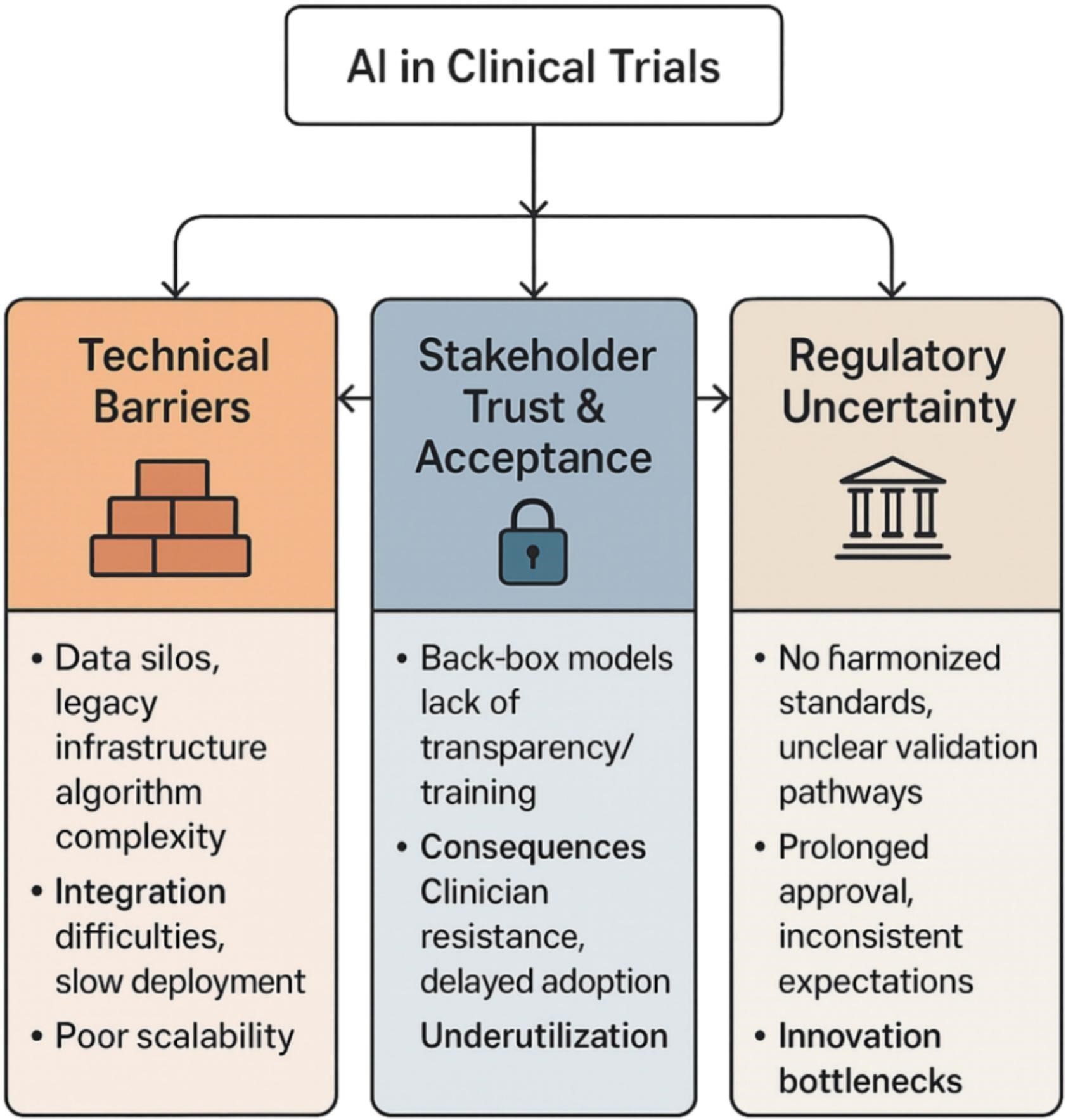
Figure 1. Interconnected barriers to AI implementation in clinical trials (Olawade et al., 2026)
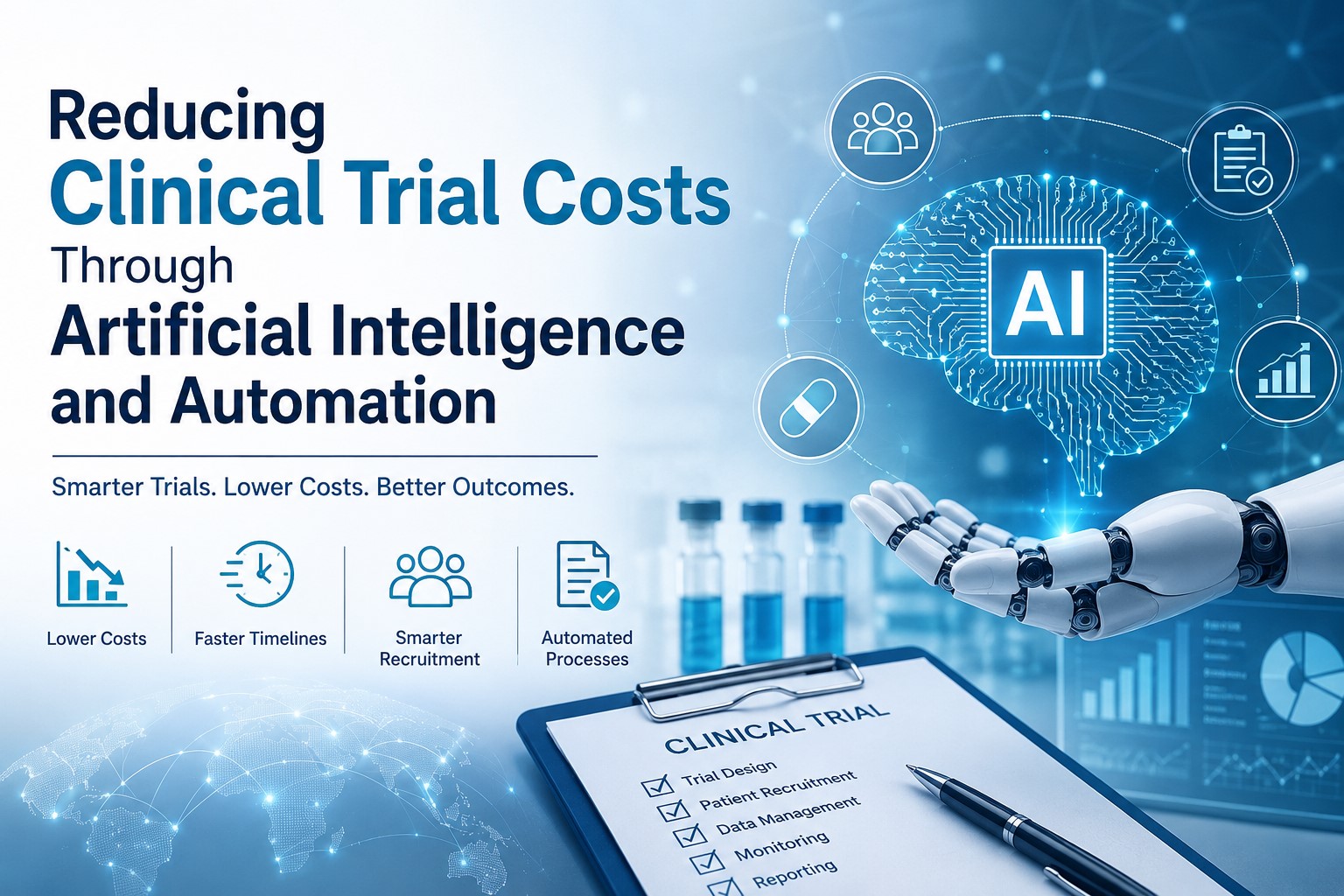
The field of clinical trials is being transformed through the ability of AI to help organizations make smarter decisions faster. While organizations had been dependent entirely on traditional assumptions and human-driven data analysis, AI-based applications allow them to analyze large datasets, predict potential risks, find patterns, and automate processes in clinical trials. Some organizations have already started gaining benefits from implementing AI in protocol design, recruitment, monitoring, and documentation processes. The research studies prove that the implementation of AI can help reduce the costs of clinical trials up to 40% (Olawade et al., 2026).
The main problem with development is that the trials are not designed well. This is very expensive. The artificial intelligence tools can look at how trials worked in the past, what kind of patients were in the trials, and what kind of treatment they had. What the regulators said. This helps the people in charge make plans for the trials from the very beginning. The tools can also try out ways of doing things to find problems before they even happen. Some companies are using intelligence to make planning easier and faster. They can plan a trial in a few minutes instead of weeks. This way of planning has shown that it can help us make guesses about what will happen, plan things better, and figure out if a trial is possible (Olawade et al., 2026).
Patient recruitment is a reason why clinical trials get delayed. The old ways of finding patients are slow and expensive. Artificial intelligence helps with recruitment by finding the patients faster. These technologies can really cut down the time it takes to find and screen patients. By looking through thousands of records by hand, artificial intelligence systems can quickly find patients who are likely to be a good fit. This reduces the amount of work for the people in charge of the trials. Studies have shown that using intelligence to classify patients can really improve the recruitment process and get more patients to join the trials. For people in charge in the Asia-Pacific region, this is especially important. This region has a lot of patients. It can be hard to recruit them because of the different environments in cities and rural areas. Using intelligence to recruit patients helps to make the process more consistent and scalable in different healthcare systems (Cascini et al., 2022).
One of the most obvious areas of savings comes from automating administrative tasks and documentation. There are many documents created throughout clinical trial processes, such as clinical study reports, regulatory documents, monitoring reports, safety narratives, and site communications. All of these activities historically involved a large amount of human work. Nowadays, generative AI and automation technology is drastically cutting down the time required to create documentation, along with enhancing consistency and compliance. Document generation AI systems are capable of helping with regulatory writing, automated formatting, and submission preparation. Additionally, automation technology allows companies to expand their operations without expanding their workforce correspondingly. As clinical trials become more global, there is an increased need for process automation using artificial intelligence (El Arab & Al Moosa, 2025).
Clinical data management is a lot of work, and mistakes are often made. Big trials produce an amount of data from lab devices that people wear, imaging systems, patient reports, and other activities. When people try to manage all this information by hand, it usually takes a lot of time, and things do not always match up. Now systems that use intelligence are making clinical data review faster and more accurately. These systems can automatically clean up data, find mistakes, and manage questions in a way. This helps organizations spend time reviewing data by hand and makes the data better. These changes can help get databases ready sooner, cut down on monitoring costs, make things easier for the people running the trials, and get everything for the people who make the rules. Systems that use intelligence to manage data are especially helpful for big trials that involve many countries and companies in the Asia Pacific area (Olawade et al., 2026).
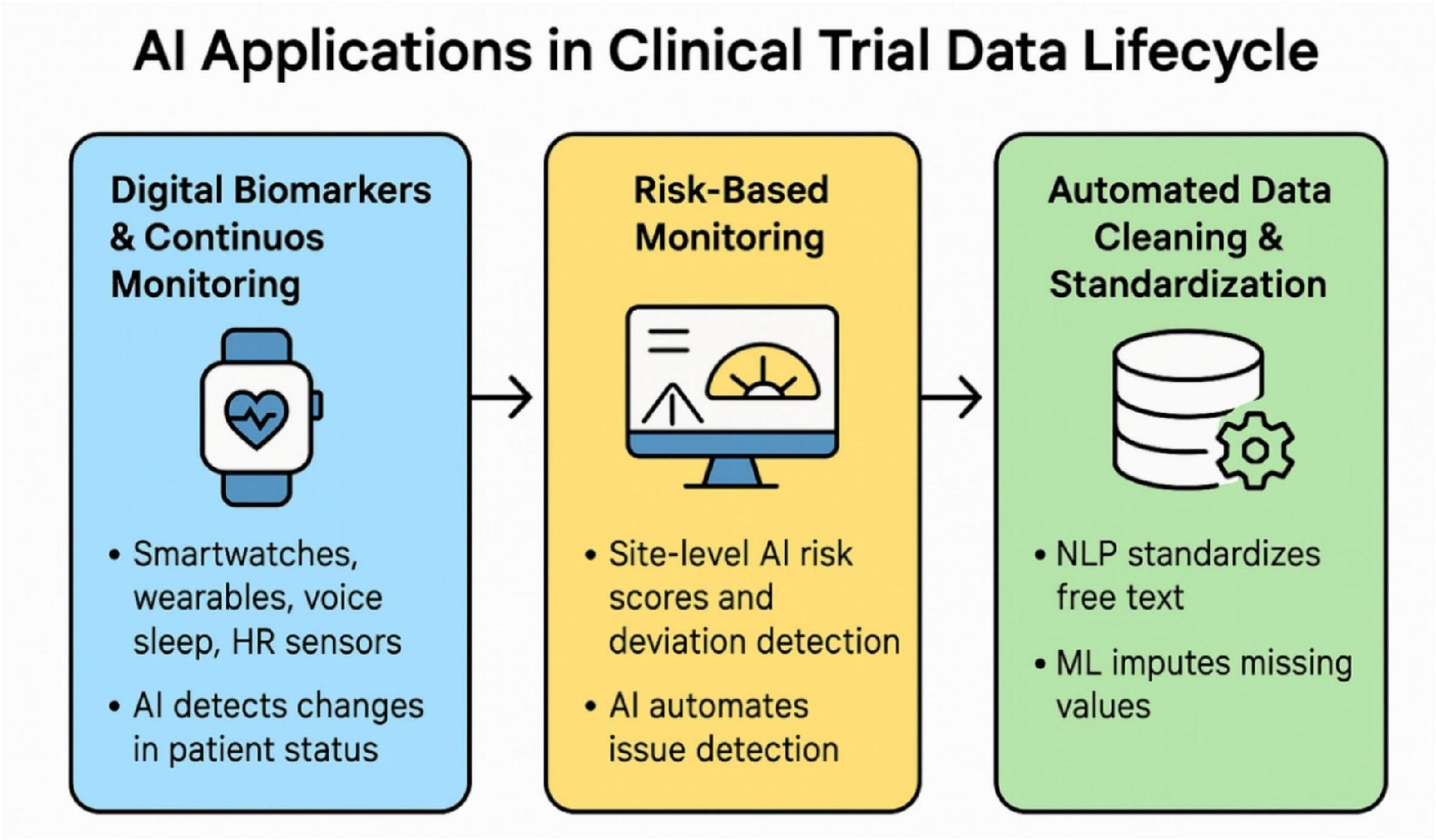
Figure 2. AI Applications across the Clinical Trials Data lifestyle (Olawade et al., 2026)
Due to the COVID-19 situation, there was a faster implementation of decentralized clinical trial design in recent times, but this method will benefit from AI development as well. Decentralized and hybrid trials cut the need for in-person visits by using remote engagement and remote patient monitoring tools. By implementing remote patient monitoring, telemedicine solutions, wearables, and electronic informed consent tools, organizations are able to gather real-time data as well as increase patient involvement and retention rates, which is assisted by AI in processing these large data streams. This way, operating costs at trial sites, travel reimbursement programs, difficulties with recruiting participants, and even high attrition rates can be considerably decreased. For APAC nations with a dispersed population, decentralization is going to be one of the best approaches for cost reduction (Olawade et al., 2026).
Further developments in clinical studies are expected to result in highly integrated intelligent ecosystems with the usage of predictive analytics, automation, real-world evidence, and adaptive trial management. Today, in silico trials and other AI-based predictive platforms that can optimize trial design, predict its outcome, and help improve it without recruiting patients are intensively researched. There is no need for the main players in this area to invest heavily in AI research and development. Success is guaranteed through effective utilization of the latest technologies.
Reducing costs by means of conventional operational methods is not going to be possible for clinical trials. In light of the complex nature of global drug development, it requires a completely different mindset, which includes intelligence, automation, scalability, and prediction. (PubMed)
From optimizing trial planning and patient recruitment to document automation and prediction to managing clinical trials in a decentralized manner, automation and AI are helping to make clinical trials more efficient. They are no longer a subject of experimentation but have become operational necessities. AI will allow the US-based pharmaceutical companies to commercialize their products quicker and make their operations more effective and efficient as well as improve the economics of their pipeline. For the companies based in APAC, it is a chance to establish themselves as world innovation centers in digital clinical trials. Those organizations that manage to blend the power of technology, operational excellence, regulation, and human resources are going to dominate the future of clinical development.
Cascini, F., Beccia, F., Causio, F. A., Melnyk, A., Zaino, A., & Ricciardi, W. (2022). Scoping review of the current landscape of AI-based applications in clinical trials. Frontiers in Public Health, 10, 949377. https://doi.org/10.3389/fpubh.2022.949377
El Arab, R. A., & Al Moosa, O. A. (2025). Systematic review of cost effectiveness and budget impact of artificial intelligence in healthcare. Npj Digital Medicine, 8(1), 548. https://doi.org/10.1038/s41746-025-01722-y
Olawade, D. B., Fidelis, S. C., Marinze, S., Egbon, E., Osunmakinde, A., & Osborne, A. (2026). Artificial intelligence in clinical trials: A comprehensive review of opportunities, challenges, and future directions. International Journal of Medical Informatics, 206, 106141. https://doi.org/10.1016/j.ijmedinf.2025.106141
Yan, J., Zhang, J., & Tian, T. (2025). Evidence behind the automation of clinical trial statistical programming: A scoping review of technology adoption, validation frameworks, and ai/ml integration(2020–2025). https://doi.org/10.64898/2025.12.24.25342988

 EN
EN  cn
cn  de
de  jp
jp