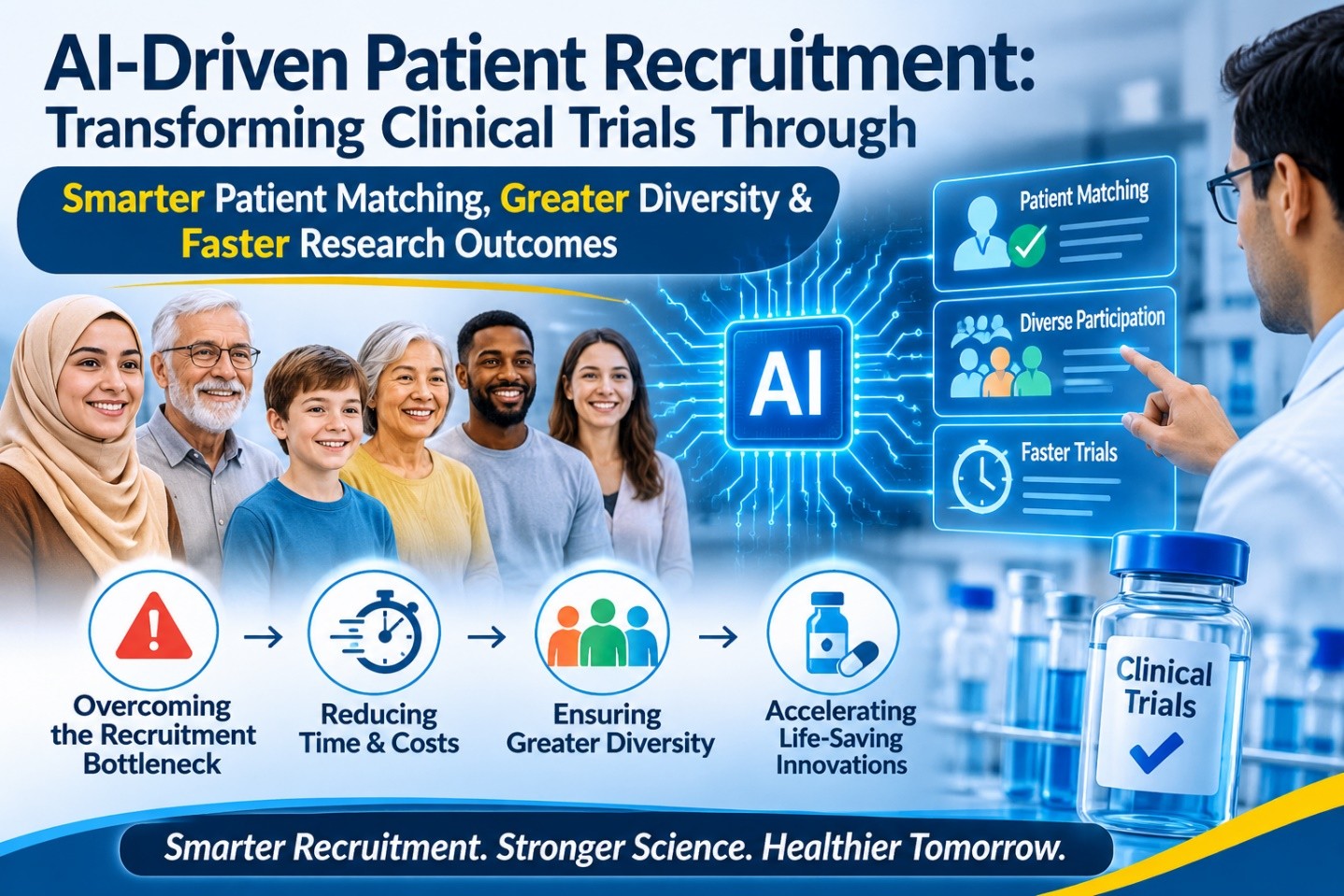
Clinical trials are essential for bringing medical care from the lab to the patient's bedside. But this process is expensive and time-consuming, taking ten to fifteen years and costing up to $2 billion. It is concerning that under-recruitment affects more than forty percent of trial locations. The difficulty of recruitment can cause studies to last from one to six months longer. That makes the studies less effective and less efficient. Research shows that women are mostly missing from trials, that older adults are mostly missing from trials, and that minority groups are mostly missing from trials. This lack of diversity weakens the validity of the results. Traditional ways of recruiting participants tend to be time-consuming. Can be biased. Artificial intelligence can help by matching participants effectively and analyzing large data sets. It can spot patterns quickly, which speeds up the entire clinical research process. The role of AI in trials is growing steadily. This growth leads to productivity and lower costs. AI also plays a role in analyzing biomedical data and improving decisions about who to include in trials. This is especially valuable for sponsors, researchers, contract research organizations, and healthcare providers in the United States and the Asia-Pacific region. Both areas have potential for research. There are major differences between them in terms of patient populations, health systems, legal rules, and data environments. (Yin et al., 2026).
Patient Recruitment Bottleneck
According to studies, 80% of clinical studies fail to meet their enrollment goals on schedule, which causes delays and higher expenses. Barriers related to geography, socioeconomic status, and demographics worsen these issues, leading to some populations' underrepresentation. Furthermore, patient retention is an ongoing issue that affects the validity of results, with dropout rates in some trials as high as 30%. Only 10% of drug candidates that proceed to Phase I trials finally win approval. Trials that don't succeed often fail because of poor planning by trial organizers and researchers. Unmet endpoints, as well as the challenge of designing trials in the right patients for a given therapy, contribute to this. For example, AI-driven methods such as predictive modelling and natural language processing have potential applications in trial design, patient identification and recruitment, and data analysis (Hope Nyavor, 2024).
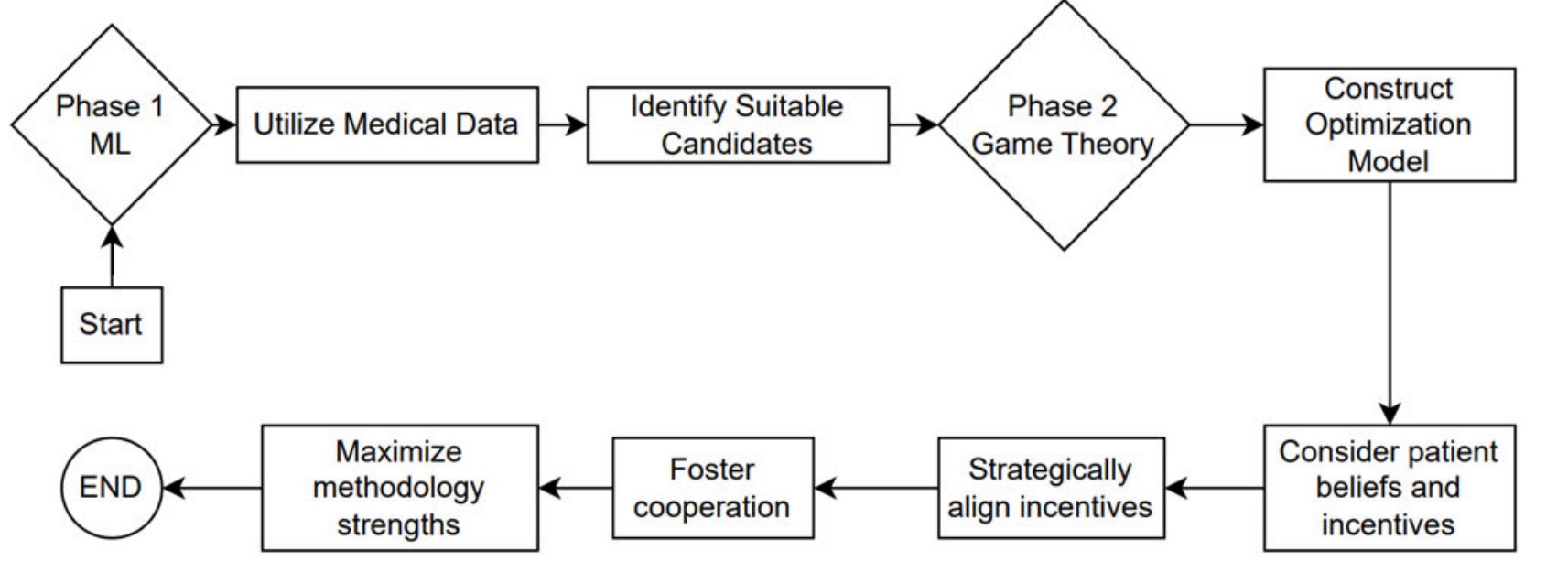
Figure 1. Framework Overview (Kumar et al., 2024)
Role of AI in Patient Identification and Screening
Recruitment in the past was done by word of mouth from physicians, by newspaper ads about the trial, by radio and TV advertising, and by face‑to‑face screening. These methods were only somewhat successful on a large scale, but they caused many problems, such as delays, high operating costs, and low recruitment rates. I have seen that, according to some analyses, eighty percent of trials face a delay because of problems in recruiting participants, and ten to thirty percent of clinical trials fail only because Electronic Health Records, or EHRs, have made it easier to follow patients by checking the codes for their health conditions, the medicines they have taken, and the times they have visited the doctor. These records can be connected with tools that work automatically to make everything work better. Then came machine learning, or ML. It brought bigger changes. ML could use amounts of data—like genomics, medical imaging, or even long notes written by doctors—to judge who might be eligible for a trial. For example, tools like TrialGPT can look through thousands of trials and match them to patients in a smart way. (Uppuluri, 2024).
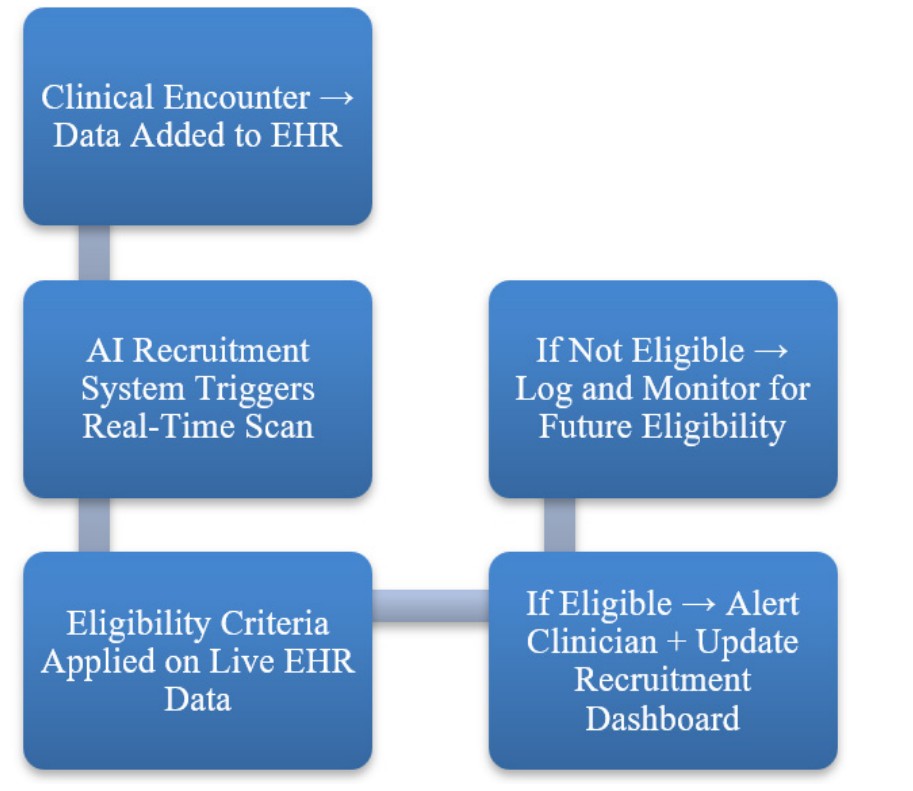
Figure 2. Implementation Framework with Electronic Health Record (Uppuluri, 2024)
AI models used
AI models were used at the levels of patient recruitment, starting from the beginning, middle, and end. Natural language processing models were used to handle and understand data, especially clinical notes and trial descriptions. Indeed, modern transformer-based models like BERT and BioBERT were used to find meaning from texts and connect them to the patient eligibility criteria for the trials. As a result, major machine learning algorithms such as regression, decision trees, and random forests were used to calculate the eligibility score for patients using past EHR patterns and other deep learning methods, like Convolutional Neural Networks (CNNs) (Uppuluri, 2024).
Recruitment Criteria Optimization
The optimization of intelligence systems starts with looking at large datasets. These datasets come from clinical trials, observational studies, and electronic health records (EHRs). By using analysis, we can find out which factors really affect the outcomes. We also look for any elements that might make it harder to get people to enroll in studies. For example, it may reveal that excluding patients with minor comorbid conditions does not significantly impact trial results while reducing the pool of available patients. Such inclusion and exclusion rules can then be advanced to reflect the necessary balances of data analysis in a more informed way (Uppuluri, 2024).
Diversity Using AI-Powered Methods
One of the challenges faced in conducting research at present is the under-representation of minorities and underserved communities. This might affect the generalization of research outcomes since only a few population segments are involved in such studies. The application of intelligence in order to engage with a more diverse range of population segments would be helpful in this regard. It will be possible to engage with diverse segments using the intelligence that would be generated through integration of platforms such as social media, mobile applications, and research registries. Such engagement could be carried out using relevant and appropriate messages (Prashanth Reddy Areddy, n.d.).
AI-driven recruitment in the US market
Due to the increasing number of clinical research studies, strong electronic health record systems, academic medical centers, specialist groups, and a strong pharmaceutical industry, the United States offers a big chance for using AI to find candidates for research. The American healthcare system is also not very connected. Different hospitals, health organizations, insurance companies, and specialty offices all provide care to patients. Sometimes different terms are used in the records. It is not always easy to share information. By searching for people in health systems that are part of a study, checking the records against the study rules, and helping to bring people in from many research places, AI can help with some of these problems.
Use of AI in Patient Identification and Retention
The purpose of AI patient-trial matching technologies is to pair the right clinical trials with patient profiles. Usually, these AI patient-trial matching technologies take both unstructured EHR data and use clearly defined eligibility criteria or free-text eligibility descriptions that come directly from curated trial protocols or ClinicalTrials.gov. This area includes a variety of AI and machine learning techniques, such as transformer-based models, NLP-enhanced rule-based pipelines, semantic similarity approaches, and various machine learning classifiers, such as logistic regression and gradient boosting machines. Certain technologies produce ranked trial lists with high levels of trust or visual clarifications of inclusion/exclusion characteristics for every patient. At every level of the workflow, AI‑driven digital technologies can improve the hiring and retention process for trials. AI‑driven digital technologies such as chatbots, digital research assistants, and patient tracking platforms for telemedicine usually function as front‑end systems. AI‑driven digital technologies intended to improve adherence among patients during the retention phase typically use a variety of approaches to get around adherence obstacles, such as customized interventions, engaging real‑time monitoring, and predictive grading for worsening diseases. (Yin et al., 2026).
Technical problems
A facilitator
We view the AI system's many benefits as facilitators, which can encourage its use in clinical trial recruiting. By using solutions like CogStack, it is possible to perform quick searches and filtering, reduce the burden of manual audit, and reduce the amount of patient notes that require manual review by 85%. Second, according to Cai et al., the algorithm greatly decreased the number of patients needing human chart review by 40.5% by adding data from EHR, all the while keeping eligible patients, enabling a more precise screening procedure.
Barriers
However, AI also has several demerits that could hinder its use in clinical trial recruitment, such as the black box problem, and we see these shortcomings as the main barriers. Using these methods could help make better use of the resources used for finding people to join clinical trials, but it might also bring in some hidden biases into the group of people in the trial (Lu et al., 2024).
Risk of ethical issues.
Despite the benefits and helpful factors, the use of AI in clinical trial recruitment naturally raises many ethical concerns. Privacy and data security are concerns when using AI in clinical trial recruitment. I think it's really important to protect privacy and make sure data is secure. Artificial intelligence tools often have to look at records. It's crucial that this information stays private. Only people who are allowed should be able to see the data. The quality and variety of data used to train AI models greatly affect how accurate and dependable AI models are. I think that when there is no information about rare diseases, AI results may become less reliable. I also notice that specific conditions can influence how well AI models work in trials. To lower the risk of treatment bias or biased results, the suggestion is to use more diverse groups of people, longer observation periods, or different parts of the data. (Lu et al., 2024).
Conclusion
One of the problems in clinical development can be solved easily with AI-driven patient recruitment. AI can make selecting patients more targeted and successful by helping research teams review records, find participants, match patients with the right trials, and predict if patients might leave a study. Managing scattered healthcare data, improving access to communities, and supporting representation are the goals for the United States. Creating recruitment processes that work across languages, healthcare systems, legal rules, and levels of development is important for success in APAC. Because there is no help, advanced AI systems can fail. The best model mixes AI with researchers, doctors, and a patient community that truly takes part. It is the job of the algorithm to handle the task of processing information. It is people who need to make clinical decisions to think about ethical issues and help patients make smart choices. AI's real strength is in getting patients to learn about the studies, responsible patient recruitment, and better data that can improve the evidence that affects future patient care.
References
Hope Nyavor, S. A., Mallika K. Singh,. (2024). Advancing clinical trial outcomes using deep learning and predictive modelling: Bridging precision medicine and patient-centered care. World Journal of Advanced Research and Reviews, 24(3), 001–025. https://doi.org/10.30574/wjarr.2024.24.3.3671
Kumar, C. U. O., Singh, I., & Suguna, M. (2024). Optimizing patient recruitment for clinical trials: A hybrid classification model and game-theoretic approach for strategic interaction. IEEE Access, 12, 10254–10280. https://doi.org/10.1109/ACCESS.2024.3351688
Lu, X., Yang, C., Liang, L., Hu, G., Zhong, Z., & Jiang, Z. (2024). Artificial intelligence for optimizing recruitment and retention in clinical trials: A scoping review. Journal of the American Medical Informatics Association, 31(11), 2749–2759. https://doi.org/10.1093/jamia/ocae243
Prashanth Reddy Areddy, P. R. A. (n.d.). Enhancing patient recruitment and diversity in clinical trials: Predictive ai as a strategic solution using predictive ai and machine learning concepts relevant to clinical recruitment, international journal of advanced research and emerging trends. Vol(2), Issue 2, (2025).
Uppuluri, V. (2024). Ai-driven patient recruitment strategies for healthcare clinical trials. Journal of Artificial Intelligence, Machine Learning and Data Science, 2(4), 3038–3044. https://doi.org/10.51219/JAIMLD/vijitha-uppuluri/627
Yin, Z., Liu, Y.-C., Liew, J. C. K., Yang, R., Hendren, S., Ma, E., Geng, Z., Wang, J., Foote, H., Lindsell, C., & Hong, C. (2026). Artificial intelligence in clinical trial participant recruitment and retention: A scoping review and meta-analysis. Journal of Clinical and Translational Science, 10(1), e98. https://doi.org/10.1017/cts.2026.10743

 EN
 cn
 de
 jp