

Artificial intelligence is moving from the edge of research into the heart of it. Artificial intelligence can help find the study patients, read medical pictures, guess how patients will do, make trial work smoother, spot safety warnings, and speed up new medicine creation. For people who run research in the United States and, over the Asia‑Pacific, the question is not whether artificial intelligence will be used in clinical research. Language, culture, and how people feel about sharing data also change from place to place. Because of this, ethical AI is not a list of technical tasks (Youssef et al., 2024).
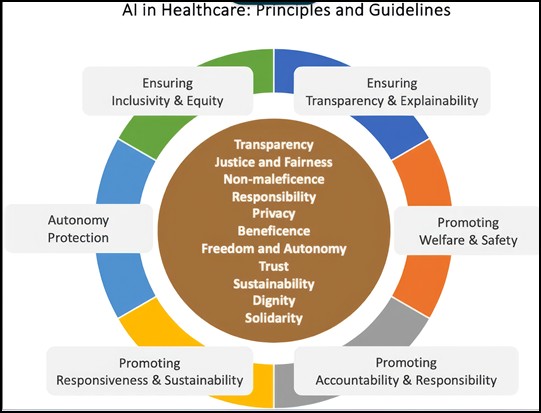
Figure 1. Ethical principles and guidelines (Mennella et al., 2024)
AI Is Not Ethically Neutral
One of the common misunderstandings about AI is that an algorithm is fair just because it is based on math. In reality every AI system shows decisions made along the way: what data was gathered, how results were set, what the model was trained to predict, and how the results will be used. This is especially important when working in countries. People in places have different genes, sickness rates, environments, access to care, ways doctors treat patients, money situations, and habits when it comes to health. If those differences are not in the data used to build and test the model, the model may not work the way in different places (Shaw et al., 2024).
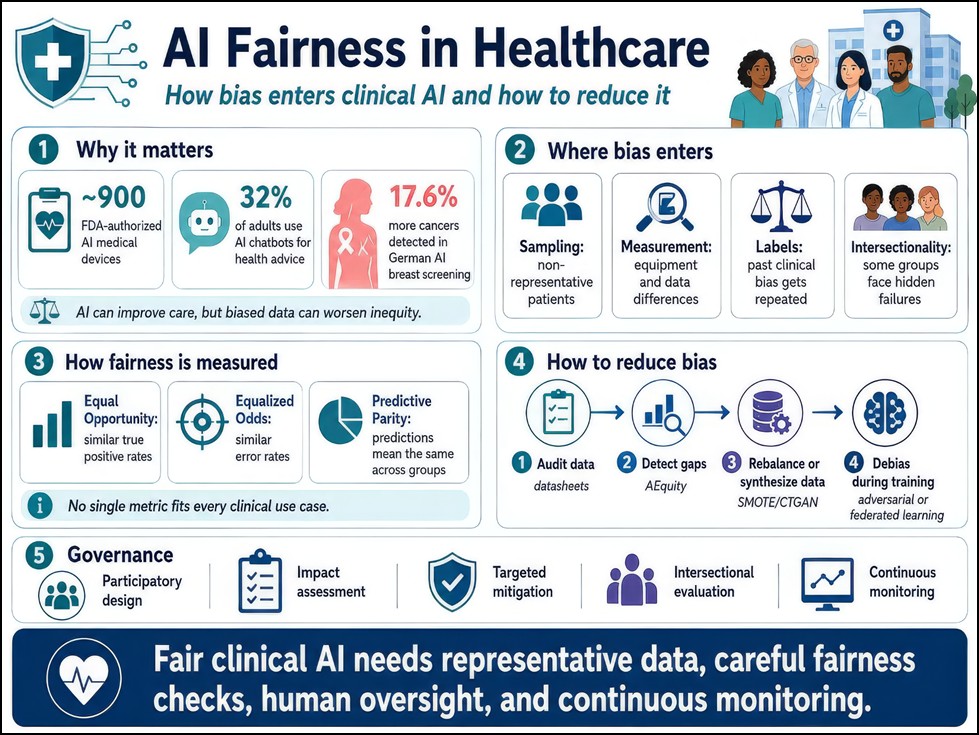
Figure 2. AI Fairness in Healthcare (Weeranayake, 2026)
The Global Equity Problem
AI has the potential to make clinical research available to people, but it could also make the gap bigger between places that have lots of technology and those that don't. The Global Forum on Bioethics in Research talked about these worries. They said that developing AI in a way that makes sure it can be used in different places, being responsible for what happens, getting proper consent, thinking about the environment, and having fair partnerships are all important issues for how AI is handled. Recent studies about language models in clinical trials in the Global South also say that AI chances should be looked at together with the limits in infrastructure and the risks to ethics. It should not be assumed that systems built in countries will work just as well elsewhere (Shaw et al., 2024).
This is especially true for APAC leaders. The region is not one clinical or regulatory environment. This includes highly digitized markets but also countries where the health-data infrastructure is patchy. Therefore, a sensible AI strategy should focus on local validation, local expertise, fair data partnerships, and real capacity building, rather than just seeing the region as a convenient source of patients or data.
Informed Consent Needs to Catch Up With AI
Traditional informed consent assumes that researchers can explain what will happen to a participant, what risks might appear, how information will be used, and what choices the participant has.
A participant may consent to provide records for a trial without realizing that those records could later be used to train a machine-learning model, mixed with other data sets, or help build an algorithm that keeps learning after the study ends. The answer is not to overwhelm participants with explanations of neural networks, model designs, or statistical jargon. Good AI consent should instead explain the consequences in plain language:
- Why is AI being used in this study?
- What data will be analyzed?
- If a participant withdraws, what happens to data?
- Who is responsible if the system makes an error?
For trials, informed consent must also be culturally and linguistically appropriate. A compliant consent form is not always an ethically meaningful one. Participants should be able to understand the implications of AI in their language and within their own cultural context (Su et al., 2026).
Privacy Is More Than Data Security
Clinical research has always needed data protection. AI increases the risk because machine‑learning systems can find patterns in amounts of data even in data that participants might think is not clinically sensitive. Genomic information, imaging, wearable‑device data, location data, behavioral patterns, and electronic health records can together build detailed profiles of people and groups. Even if obvious identifiers are removed, linking the data sets can raise the chance that people can be re-identified. This shows that ethical AI governance must go beyond cybersquatting. Encryption and access controls are still essential. Companies must also ask if collecting a specific data set is really necessary if the data are used for purposes that participants could reasonably expect and if the time the data is kept matches the research goal (Harishbhai Tilala et al., 2024)
Transparency Without Pretending AI Is Perfectly Explainable
“Black box" has become a criticism of AI in medicine. The worry is real. The fix is not always to ask for a perfect explanation of every step. A clinical investigator does not need to understand every parameter in a neural network. However, the investigator should know which people the model was trained on, which people the model was tested on, what outcome the model predicts, how performance changes among groups when the model must not be used, and how mistakes will be spotted (Harishbhai Tilala et al., 2024)
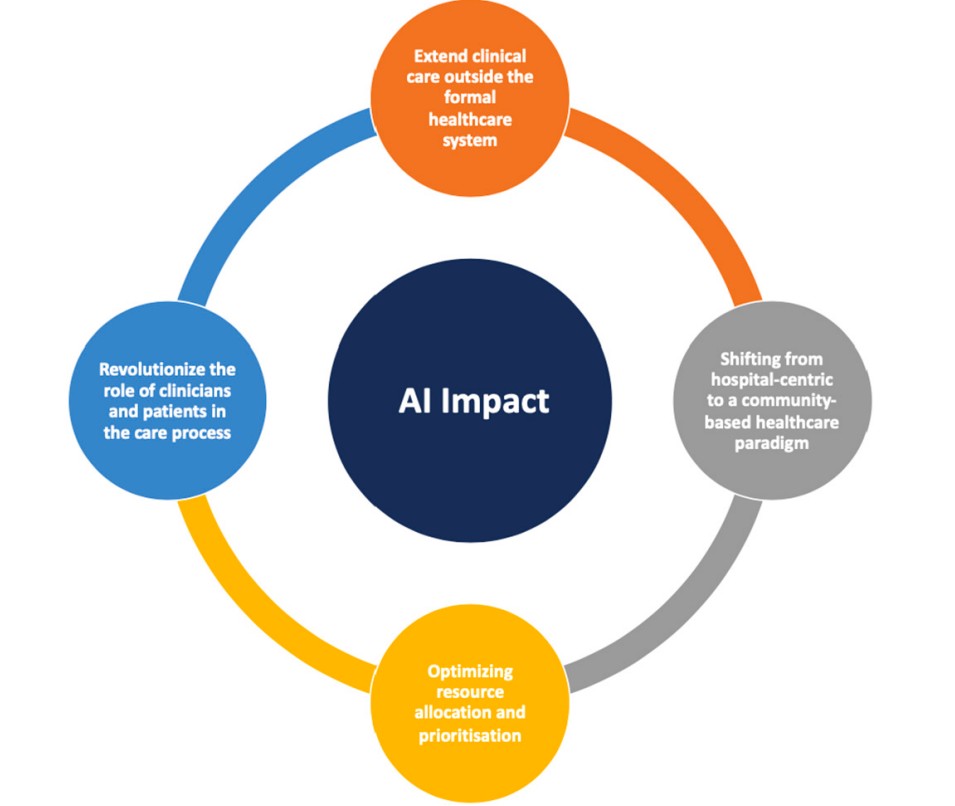
Figure 3. Impact of AI on future healthcare system (Mennella et al., 2024)
Who Is Accountable When AI Is Wrong?
Imagine an AI system makes a mistake and says a patient can join a study when they really cannot. There might be a chance that AI cannot process if the patient is getting sick. AI cannot take responsibility for the way a human can. Accountability must stay with people and real organizations who have clear jobs to do. Some new studies on healthcare AI say that as AI systems start to act on their own, we still need accountability, real oversight, strong company rules, and constant monitoring after the AI is out in the world (Youssef et al., 2024).
Sponsors and investigators should establish in advance:
● who approves an AI system for research use;
● who validates its performance;
● who monitors subgroup performance;
● who investigates unexpected outputs;
● who communicates AI-related incidents to participants and regulators; and
● who retains responsibility for the final clinical or research decision.
Human oversight should be substantive, not ceremonial. A clinician who is technically “in the loop” but automatically accepts every AI recommendation is not providing meaningful oversight.
The Risk of Automation Bias
Even people who are well trained can trust computer suggestions too much. This problem is called automation bias. It causes a big issue in clinical research. The smarter or fancier an AI system looks, the easier it is for people to just follow what the AI says. That is why we cannot just tell doctors to "use their judgment" and leave it at that. To do this, researchers need real rules. We need ways to check the work steps to take when things go wrong, tools to see how the AI is doing good training, and clear notes on how everything works. The goal is not to get rid of thinking to let machines take over. The goal is to build a partnership. We want AI to do the math, where computers are good, but we need humans to stay in charge of understanding the situation, talking to patients, and making the right ethical choices. Most medical AI experts agree that AI should help judgment, not replace professional judgment (Youssef et al., 2024).
.
What This Means for US and APAC Research Leaders
For senior leaders, ethical AI should move from the compliance department into the operating model of clinical research. A practical governance framework can begin with five questions:
1. Will the system be monitored after deployment? When populations, workflows, data quality, or clinical practices change, the performance of AI may change. Therefore, ongoing surveillance should be seen as an element of research governance rather than an optional technical task.
2. Is the population adequately represented? Validation should examine how the system works across demographic, geographic, clinical, and socioeconomic groups.
3. Does the consent process reflect AI use? Participants should understand the implications of automated analysis, secondary data use, and decisions that use AI.
4. Is accountability explicit? Every AI research process should have named owners for validation, monitoring, incident management, and final decisions.
These principles are similar to the view of the World Health Organization that AI for health should keep human rights at the center of design, deployment, and use while keeping accountability (Youssef et al., 2024).
Developing Trust as a Competitive Edge
“AI ethics is often seen as an obstacle to ideas. It has a very narrow view.
Trust is a valuable tool in clinical research.
In clinical research trust is a key tool. Patients will join studies when they feel their data will be handled carefully. Researchers will use AI when they know its limits. Regulators will talk openly when sponsors show strong governance. Partners will share data when ownership, allowed uses, and duties are clear. This matters more as generative AI and smart machine‑learning tools gain ground. New studies say that ever‑learning systems can shake up ideas about consent. pulling back personal freedom and the trust of the public. It shows that the old research‑ethics rules may need help from wider rules that cover institutions and whole communities (Su et al., 2026).
Conclusion:
Artificial intelligence can change clinical research. Artificial intelligence can make work faster, help people decide better, and speed up medicine. These good results only come if we keep ethics at the center of how we build artificial intelligence. Problems like clear consent, privacy, responsibility, and bias from automation must be dealt with by rules and constant checks. For research leaders in the US and APAC responsible Artificial intelligence means changing tools to fit people, giving people more control and earning trust from participants and partners. In the end, artificial intelligence should help judgment, not replace it, and keep patient rights, respect, and responsibility in the core of clinical research.
References:
Harishbhai Tilala, M., Kumar Chenchala, P., Choppadandi, A., Kaur, J., Naguri, S., Saoji, R., & Devaguptapu, B. (2024). Ethical Considerations in the Use of Artificial Intelligence and Machine Learning in Health Care: A Comprehensive Review. Cureus. https://doi.org/10.7759/cureus.62443
Mennella, C., Maniscalco, U., De Pietro, G., & Esposito, M. (2024). Ethical and regulatory challenges of AI technologies in healthcare: A narrative review. Heliyon, 10(4), e26297. https://doi.org/10.1016/j.heliyon.2024.e26297
Shaw, J., Ali, J., Atuire, C. A., Cheah, P. Y., Español, A. G., Gichoya, J. W., Hunt, A., Jjingo, D., Littler, K., Paolotti, D., & Vayena, E. (2024). Research ethics and artificial intelligence for global health: Perspectives from the global forum on bioethics in research. BMC Medical Ethics, 25(1), 46. https://doi.org/10.1186/s12910-024-01044-w
Su, H., Xiao, F., Chau, H., Tong, Y., Han, S., Cheng, X., Che, Z., Sun, L., Yang, Y., Zhao, J., Li, Y., & Li, H. (2026). Informed Consent Disclosures and Minimum Requirements in AI Clinical Trials: Cross-Sectional Analysis. Journal of Medical Internet Research, 28, e94504. https://doi.org/10.2196/94504
Weeranayake, A. (2026). Data Processing and Algorithmic Bias Detection: A Comprehensive Framework for Equitable Clinical Artificial Intelligence. https://medium.com/@anjulaweeranayake/data-processing-and-algorithmic-bias-detection-a-comprehensive-framework-for-equitable-clinical-b88f6b104234
Youssef, A., Nichol, A. A., Martinez-Martin, N., Larson, D. B., Abramoff, M., Wolf, R. M., & Char, D. (2024). Ethical Considerations in the Design and Conduct of Clinical Trials of Artificial Intelligence. JAMA Network Open, 7(9), e2432482. https://doi.org/10.1001/jamanetworkopen.2024.32482

 EN
EN  cn
cn  de
de  jp
jp